

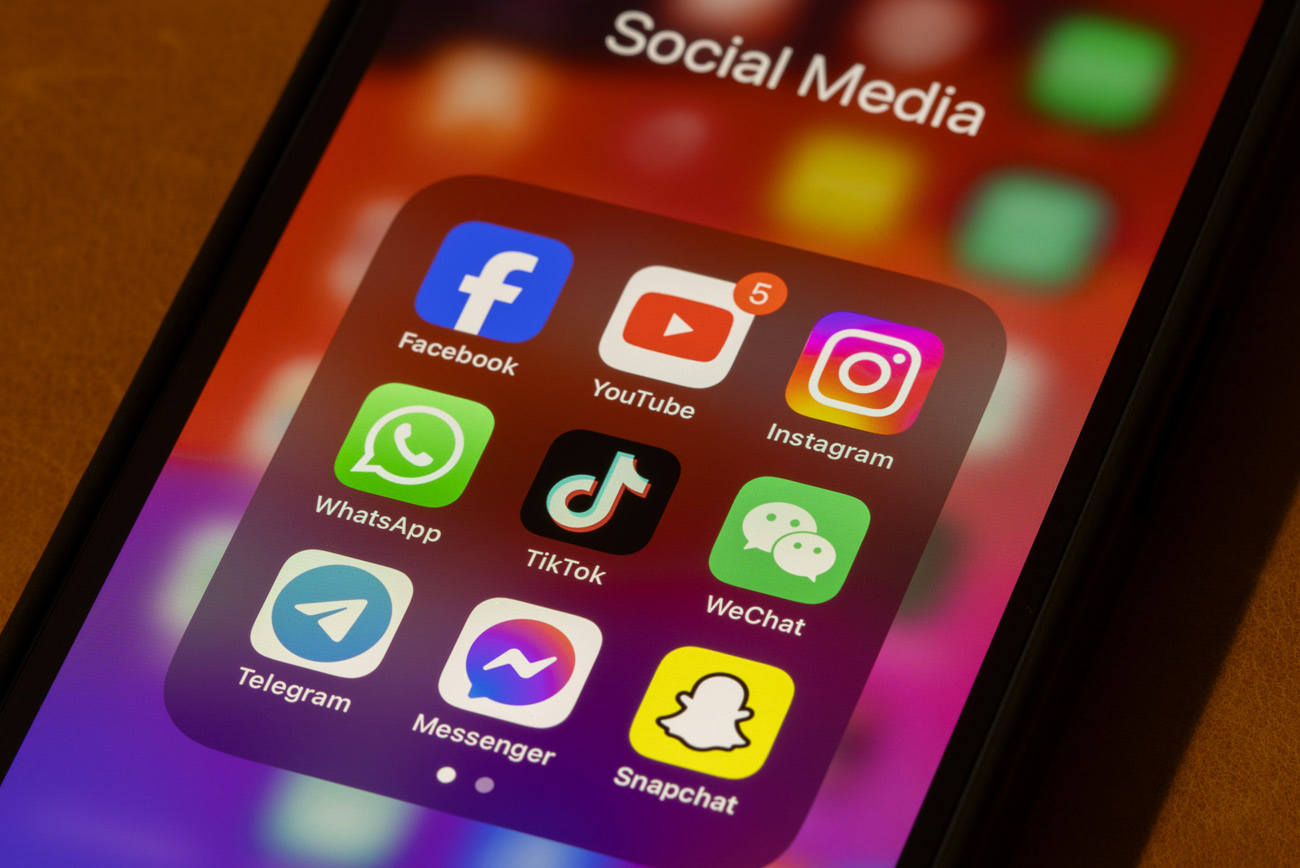
Signs social media is negatively affecting your mental health
When it comes to social media and mental health, it can be a mixed bag. On the one hand, social media can help us to connect with people, learn useful information, and raise awareness on issues that matter to us. On the other, time spent on socials may increase feelings of loneliness, inadequacy, or even symptoms of anxiety and depression.
So what are the signs that social media and mental health are out of balance? And what can we do to protect our wellbeing while scrolling? Read on to learn more.
How social media can impact mental health
Social media can be addictive
AI-driven newsfeeds are uniquely tailored to each individual user and continually update according to our engagement with content, in order to hold our attention. And, similarly to how slot machines work, social media apps deliver random rewards (likes, comments, notifications). These rewards can prompt the release of dopamine (the brain’s reward chemical) and create a craving for more. It is now even adjudicated in courts that social media apps have been designed to be addictive – in order to maximise user engagement, and with it advertising revenue.
Social media can impact concentration
When balanced, intentional use of social media may result in information learning and opportunities, unbalanced use can lead to problems. Constant screen time, frequent notifications and phone-checking can negatively affect your ability to concentrate, sleep properly, and even make decisions. Indeed, emerging brainwave research indicates social media use can interfere with attention.
Too much social media use can contribute to isolation
While social media apps can help us keep in touch with loved ones and even make new connections, too much time on them can impair our ability to connect in real life. As deeply social animals, our sense of emotional security (and by extension our mental and physical wellbeing) is innately tied to our sense of connection with others. Nothing beats face-to-face time with people that love us, and there are only 24 hours in the day. 3 hours scrolling on social media is 3 hours you then don’t have available to spend eye-to-eye with friends and family.
Social media can trigger envy and feelings of inadequacy
Social media use can foster ‘upward comparisons’, where people compare their own lives to the curated, idealised images of the lives of those on their feed. Research shows that such upward comparisons can lead to a sense of inadequacy and have a negative impact on mental wellbeing. What’s more, studies have found that too much time on social media increases the risk of depression. In order to build resilience against problems like depression and anxiety, we need to temper those upward comparisons.
6 Signs social media may be affecting your mental health
Listen to yourself. If you suspect that social media is negatively affecting your mental health, it probably is. Signs of this include:
- You feel worse, not better, after going online. At its best, social media should leave you feeling connected, entertained, inspired or better informed, but it’s become something that you just can’t quit. Scrolling leaves you feeling anxious, hopeless, depressed or inadequate, and yet the never-ending newsfeed keeps you coming back for more.
- You spend more time ‘on socials’ than with real life friends. Going on social media is acting as a stand-in for much of your offline time with friends. You notice you used to go out a lot more, but now your contact with friends is mostly what you see via the screen.
- You check your phone all the time, even when you’re with others. Have you ever been told ‘put your phone down’ by a family member or friend? Perhaps you’re out for dinner and your phone is on the table, buzzing and interrupting your conversation. ‘What were we talking about?’ You’re not fully focused on the people in front of you because the screen keeps cutting in.
- You’re suffering cyberbullying or harassment or you feel anxious that you can’t control what people may be posting about you.
- Your work or studies are suffering because you feel you have to constantly post or read the newsfeed. You intend to ‘just quickly check’ but when you look up from the screen, an hour has passed and you don’t know where the time went.
- You’re losing sleep. You check your phone as soon as you wake up, or even in the middle of the night. You struggle to get to bed at a reasonable time because you’re online. You’re sleeping less and waking more.
13 ways to protect your mental health while using social media
When used responsibly, many people find social media to be a net positive in their lives, helping them connect with friends and find information and entertainment. But if you have concerns about social media and mental health, it’s important to use the apps intentionally and set guardrails. Here are 13 ways to protect your mental health while using social media.
- Set a daily screen time limit: Research out of the University of Pennsylvania found that cutting down social media use to half an hour a day was linked to marked reductions in levels of depression and loneliness.
- Download a digital wellbeing app: These apps help you to tailor a digital experience that works for you, instead of against you. You can cut down screen time and use the internet intentionally by blocking off distractions and instructing the app to remind you or even kick you out of socials when you’ve gone past your time allotment.
- Try a minimalist phone interface: These are apps that create a ‘boring’ or ‘dumb smartphone’ interface, replacing distracting icons with plain lists to encourage mindful use.
- Use it to connect: Some research has found that too much ‘passive use’ of social media is associated with greater levels of loneliness than actively engaging with others’ content or posting your own. So don’t waste time scrolling purposelessly or log in 10 times an hour to check your like count. If you’re going on social apps, use them to actually post, respond, or find.
- Get picky about who you’re connecting with: Who makes you feel motivated and positive? Move in that direction. You don’t have to accept every follower or friend request just to get your count up. If you’re constantly seeing posts by people who make you feel bad or send your blood pressure skyrocketing, unfollow or mute them.
- Stop comparing your insides to other people’s outsides: Most of the time people are posting heavily filtered, idealised versions of their lives. On the wrong day, you then compare those posts to your own bad-day self-impression and it makes you feel worse. ‘Everyone is richer, happier and more successful than me.’ We’ve all done it. But no one’s life is quite what it seems on socials, so quit the comparisons.
- Consider if you might need a break: If you’re really struggling to beat a social media habit, a couple of weeks off might help to reset your relationship with the apps.
- Practice healthy scepticism: Social media is often awash with misinformation, doom, and conspiracy theories, leaving you feeling demotivated and depressed. Before you repost that dramatic story, check the source. Websites like Full Fact and Snopes are good fact-checking tools.
- Disable the notifications: It’s impossible to focus when your phone is constantly flashing, so disable those notifications in settings so you can work, play, or rest in peace.
- Turn off your phone at key times of the day: Leave it in your bag when you’re out with friends. Turn it off for an hour or two before bed so you can get some decent sleep (or at least invest in a pair of blue light blocking glasses). Don’t take your phone into the toilet. All of these things help to build back your independence.
- Feed your offline world: Spend more time with real-life friends. Get out into nature. Pick a new hobby. Keep a gratitude journal. All these are ways of turning your focus towards your life and away from the screen. For more tips, check out our post on how to protect your mental health.
- Consider a support group: If social media is significantly affecting your mental health and you feel unable to control your use, you might consider checking out a support group such as Internet and Technology Addicts Anonymous (ITAA). They’re free and you can remain anonymous.
- Talk to a therapist: As with any other problem, sometimes self-help strategies can only go so far. If you’re really struggling with social media and mental health, it’s a good idea to talk to an experienced therapist. Dr Ben Janaway, Consultant Psychiatrist at The London Psychiatry Centre says: “Problematic social media use exists on a spectrum, and a person doesn’t have to be online all day every day for it to be affecting their mental health. So any 21st century therapist worth their salt should have practical awareness around good social media hygiene and how to help clients that are struggling with screen time.”
The London Psychiatry Centre is home to some of the UK’s finest mental health professionals with decades of experience, offering sessions in-person or remotely. If you want to get your offline life back, we can provide expert help with social media and mental health – without waiting lists.
Make an appointment by calling 020 7580 4224 or email info@psychiatrycentre.co.uk