

When antidepressants aren’t enough, there’s a reason
Do you feel like antidepressants haven’t helped your symptoms?
It is exhausting to keep trying new medication only to feel no different, or to be burdened by side effects. You might start to wonder why your body isn’t responding or if you will ever find relief. If this sounds like your experience, it could be a sign that you need an alternative pathway.
If you have tried two or more antidepressants without success, you may have been told you have Treatment-Resistant Depression (TRD). But at The London Psychiatry Centre, we look at this differently.

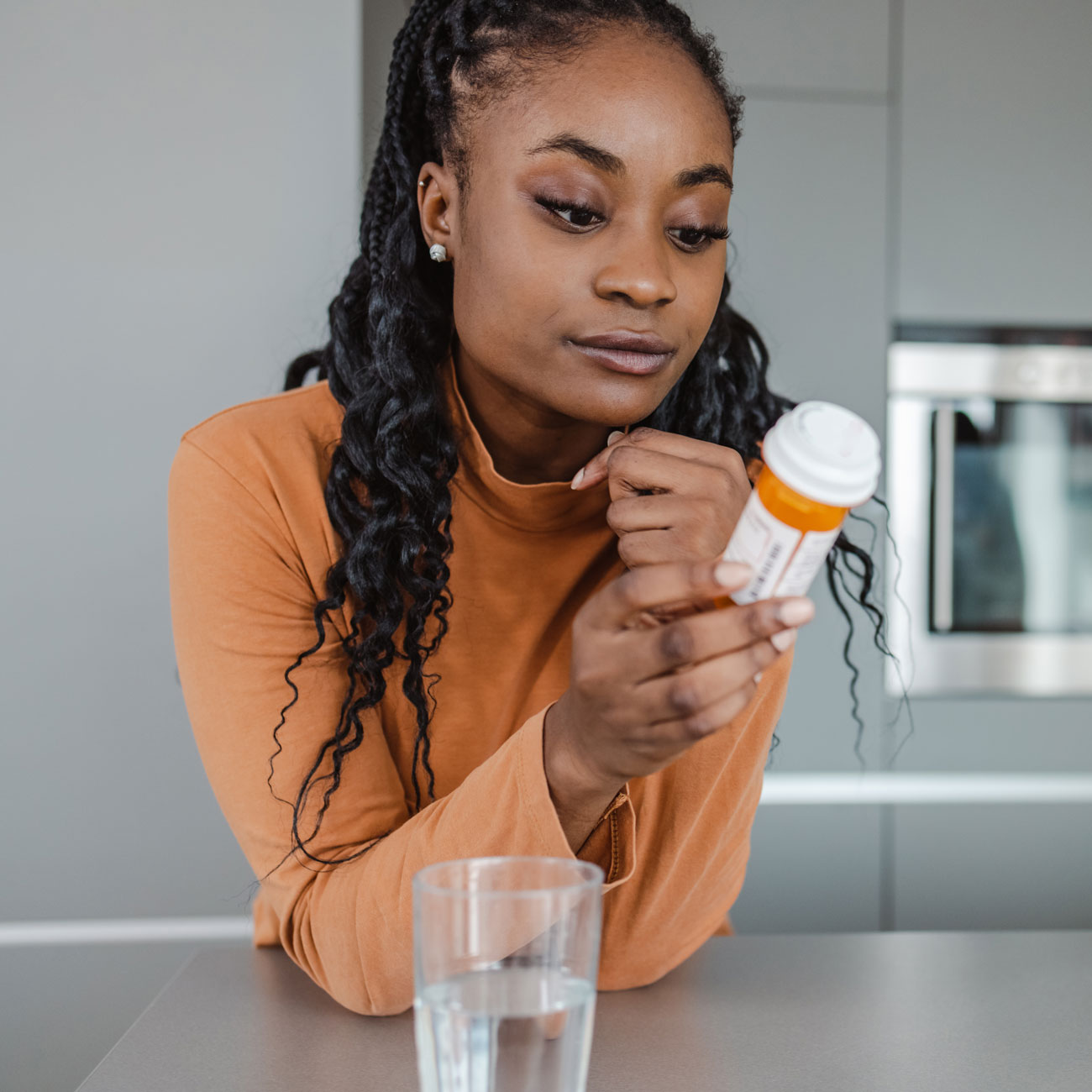
Have you had problems with side effects from antidepressants?
You shouldn’t have to trade one struggle for another
When antidepressants don’t work for you, they may leave you dealing with more than just low mood. You might feel “numb” or “flat”, and many patients also experience frustrating physical side effects, like weight gain, brain fog, or a loss of sex drive.
At The London Psychiatry Centre, we don’t think you should have to choose between feeling better and feeling like yourself.
Do I have bipolar?
Recovery is rarely a straight line, but with consistent, specialist support, many people find they can rebuild a healthier relationship with food, their body and themselves.
In many cases, people who struggle to get better are actually experiencing subthreshold bipolar disorder. You may feel the “lows” of depression, but also experience the “highs” – times where you have elevated mood and high energy. Because these periods aren’t intense enough to be labelled as Bipolar 1 or 2, they are frequently missed.
This misdiagnosis is common, but identifying it is the first step toward a treatment that finally works.
Ask yourself – Is it possible that what I suffer from may be bipolar disorder?
Only a qualified mental health professional can diagnose bipolar spectrum disorder, however, the HCL-32 bipolar disorder self-report questionnaire is a good starting point before seeking a medical diagnosis.
The total score is the number of positive answers to the 32 items listed in question 3. If you score 14 or above the positive predictive value is 73%, which means there is a 73% chance (high probability) that you have bipolarity. You should be assessed by a specialist psychiatrist.
If you score below 14 you have a negative predictive value of 61% meaning that there is still a probability of bipolar disorder in 39% of cases. We recommend you are assessed by a specialist psychiatrist.
Misdiagnosis is frustrating, but it also means there is a path you haven’t yet explored.
It is important to reconsider a diagnosis of treatment-resistant depression – especially before starting new treatments like rTMS. This is because bipolar spectrum disorders are very often misdiagnosed as depression, yet they require a completely different approach to get you well.
A new path for treatment-resistant depression.
The Zamar Protocol®
The Zamar Protocol® (Precision guided high-dose thyroid hormones and rTMS protocol) is an approach designed to treat bipolar spectrum disorder, including subthreshold bipolar disorder. While standard antidepressants often fail (and even make symptoms worse) because they aren’t targeting the right cause, our programme uses precision medicine to achieve remission at a cellular level.
What is it?
This groundbreaking treatment combines advanced therapies to effectively treat subthreshold bipolar disorder:
- Precision medicine
- Mitochondrial treatment
- High-dose thyroid hormones
rTMS, which uses gentle magnetic pulses to stimulate the brain
Why it’s different
It’s a targeted, non-invasive, antidepressant-free treatment with proven results.
By targeting the correct cause, the programme achieves a 96.4% remission rate.
In short, it gives individuals their lives back, especially those who previously thought they were “resistant” to treatment
What to expect
'Treatment-resistant' does not mean untreatable, it simply means your condition requires a more advanced, highly precise approach.
We don’t believe that you should have to wait years for life-changing treatments to become available. At The London Psychiatry Centre, we bridge the gap between research and recovery by providing the latest evidence-based care.
When you choose The London Psychiatry Centre, you are supported by a multidisciplinary team of experts. Our specialists work together to look at your health from every angle – from your biological markers to your lived symptoms. This collaborative approach ensures that your care forms a precise, expert-led path toward getting well.
We understand how difficult it can be to talk about your mental health, which is why we provide a private and safe environment for your treatment. Here, you aren’t just another patient on a list; you are an individual with a unique background. Our goal is to ensure you feel seen and heard, providing the compassionate, high-end care you deserve.
Frequently asked questions
what you need to know about treatment-resistant depression and how we can help you
What is treatment-resistant depression, and why is it often misdiagnosed?
Treatment-resistant depression (TRD) is a term used when standard treatments, like antidepressants, don’t help your symptoms. However, many people diagnosed with TRD actually have an underlying bipolar disorder.
Research shows this is incredibly common: one study of 43,000 people found that over 70% of those thought to have “pure” depression actually had subthreshold bipolar disorder. Another study found that a third of people with depression eventually “convert” to a bipolar diagnosis over time. Because the symptoms can be subtle, it is very easy for doctors to miss the full picture.
Why don’t antidepressants treat subthreshold bipolar disorder?
Bipolar disorder is biologically different from depression and requires a different approach. For those on the bipolar spectrum, antidepressants can actually be counterproductive or even harmful.
This is supported by major research, such as the STEP-BD study, which suggests antidepressants should generally be avoided for bipolar conditions. Similarly, therapies like CBT are often not enough on their own for this specific biology. If you’ve tried multiple medications and haven’t improved, it may be because you need a treatment designed for the bipolar spectrum.
How do I know if I have subthreshold bipolar disorder?
Only a qualified doctor can provide a formal diagnosis. However, a helpful starting point is the HCL-32 self-report questionnaire. The total score is the number of positive answers to the 32 items listed in question 3. If you find that this test returns a score of 14 or above, there is a high probability that you have bipolarity and should be assessed by a specialist.
If your score is 14 or below, there is still a probability of bipolarity in 39% of cases, so an assessment by a mental health professional should still be sought.
What are the symptoms of subthreshold bipolar disorder?
While you will experience the “lows” of depression (feeling hopeless, fatigued, and having low mood), you will also have periods of “highs”, or hypomania. These might feel like:
- Being unusually talkative or energetic
- Feeling restless or having racing thoughts
- Needing less sleep than usual
- Feeling “on top of the world” or very confident
- Being more active or taking more risks than you normally would
How does subthreshold disorder differ from Bipolar 1 and 2?
The main difference is the intensity and duration of the “highs”, as well as the severity of functional impairment. In Bipolar 1 or 2, the periods of high energy (mania or hypomania) are very distinct and meet specific medical criteria. In addition, daily functioning is significantly impaired, and hospital care may be required for those with Bipolar 1. In subthreshold bipolar disorder, these highs are more subtle and shorter. Because they aren’t as extreme, they are often mistaken for “good days” or just a high-functioning personality, which is why they frequently go undiagnosed.
Is The Zamar Protocol® (Precision guided high-dose thyroid hormones and rTMS protocol) the right treatment for me?
If you have been told you have treatment-resistant depression and you haven’t responded to antidepressants, this treatment may be appropriate for you, depending on the outcome of a consultation and assessment at The London Psychiatry Centre.
The Zamar Protocol® (Precision guided high-dose thyroid hormones and rTMS protocol) is specifically designed for treatment of subthreshold bipolar disorder. By combining precision-guided thyroid hormones with rTMS, we can stabilise mood and help you find remission without the side effects of antidepressants.
What is rTMS?
rTMS (repetitive transcranial magnetic stimulation) is a non-invasive, drug-free treatment. It uses gentle magnetic pulses to stimulate the specific areas of the brain that regulate mood. It is pain-free, you stay awake during the session, and you can go about your day immediately afterward. It is an effective treatment for subthreshold bipolar disorder.
Discover more about rTMS.