

SIBO and mental health: The gut-brain connection your doctor probably hasn’t mentioned
If you’ve been treated for depression, anxiety, or a mood disorder but can’t seem to get better, it may not be the medication that’s failing you. Your gut may be failing your medication.
This possibility rarely comes up in a psychiatric consultation, and might sound surprising. And yet, the science behind it is increasingly hard to ignore and could be relevant to anyone who has tried multiple medications without finding sustained relief.
Small intestinal bacterial overgrowth, or SIBO, disrupts digestion, medication absorption, and, as research now confirms, the brain itself. This article dives into what SIBO actually is, how SIBO affects mental health, and why it may be worth raising with your doctor.
What is SIBO – and why does it matter for my mental health?
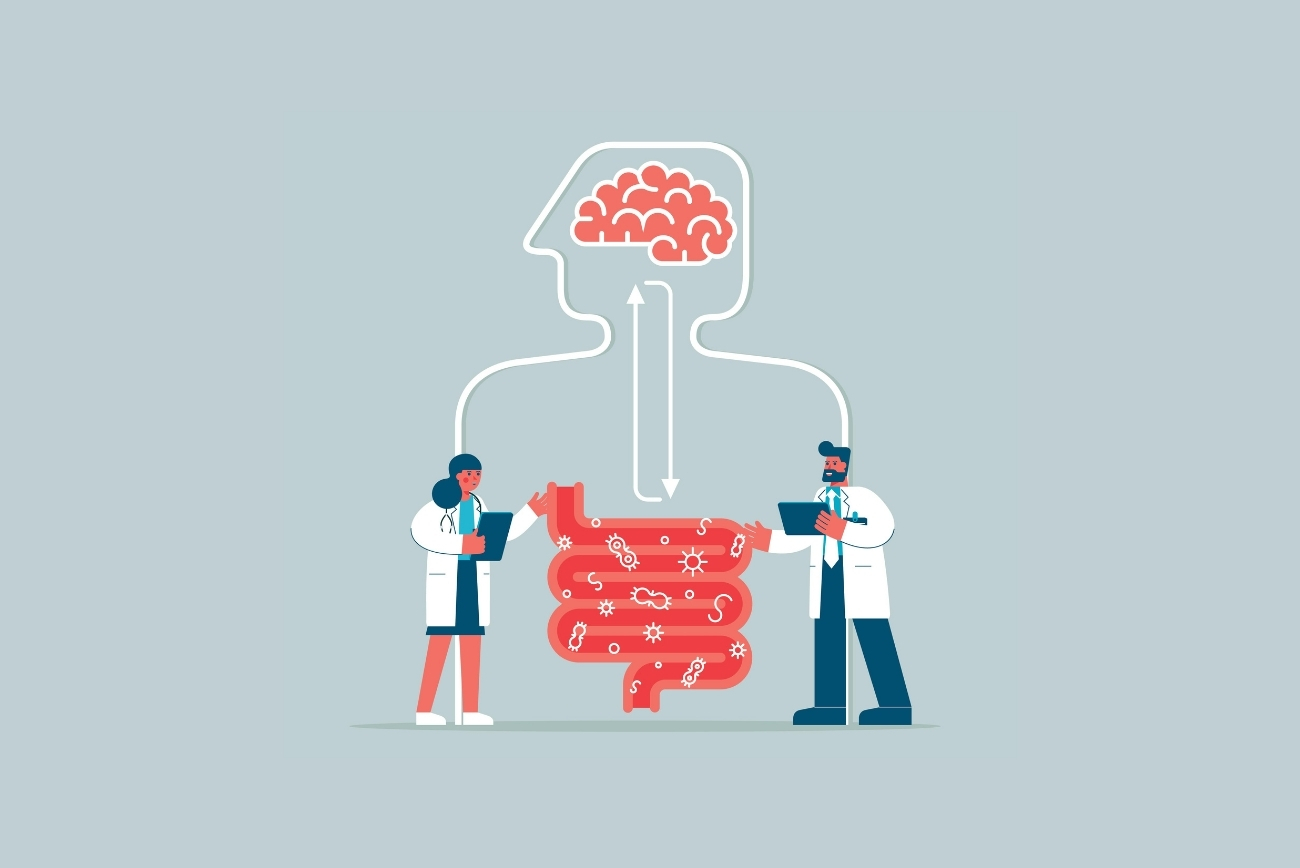
If you have SIBO, certain bacteria accumulate in your small intestine where they don’t belong. This disrupts digestion, serotonin production, and medication absorption. This matters for mental health because the gut and brain are in constant two-way communication, a pathway of the body known as the ‘gut-brain axis’.
And when the gut is overrun with bacteria, the smooth communication between the gut and the brain breaks down in ways that directly affect mood, cognition, and even how well your psychiatric medication works.
Nutritionist Amy Cottrell emphasises that “SIBO can be particularly frustrating for patients, not only because of the digestive symptoms themselves, but because of the way these symptoms can affect day-to-day life and mental wellbeing”.
SIBO is more common than most people, including psychiatrists, realise. Although there is little authoritative research on the prevalence of SIBO, it’s thought to impact an estimated 2.5% – 22% of the general population. This estimate increases sharply in people with IBS – a condition strongly associated with anxiety and depression.
If you have SIBO, you may be familiar with some of these symptoms:
• Persistent bloating or abdominal discomfort
• Diarrhoea or constipation
• Nausea or a general sense of digestive unease
Many people manage these symptoms quietly, mistaking them as ‘normal for them’, or bring them to a GP where they are often attributed to IBS and left at that. It’s rarely communicated that SIBO also disrupts serotonin production – the ‘happy hormone’ – with direct implications for your brain function.
The gut produces approximately 90% of the body’s serotonin. SIBO disrupts tryptophan – the amino acid used by the body to produce serotonin – by diverting it along inflammatory pathways instead. This means that where the body would normally produce serotonin, inflammatory compounds are produced instead.
Chronic stress worsens this process: it suppresses the gut’s self-cleaning mechanism, allows bacterial overgrowth to take hold, and elevates the same inflammatory markers consistently found in major depressive disorder. The result is a loop: stress worsens the gut, the gut worsens mood, worsened mood means more stress, partially through lowering stress tolerance.
What does SIBO actually do to the brain?
SIBO affects the brain via three distinct and well-documented pathways. Each one is directly relevant to depression, anxiety, and cognitive function.
Tryptophan and serotonin
When SIBO is present, gut bacteria divert tryptophan away from serotonin production. A patient not responding to antidepressants, for example, may simply have a gut environment where the raw material for serotonin production isn’t available. Not a medication problem, but a gut problem.
Leaky gut and systemic inflammation
SIBO also damages the gut lining. Once it becomes permeable, bacteria can enter the bloodstream and trigger systemic inflammation. Research has shown significant changes in 30 out of 44 inflammation-related factors across mental health disorders, and SIBO is a plausible driver here in a meaningful subset of patients.
The vagus nerve
The vagus nerve carries signals between gut and brain, in both directions. Think of the vagus nerve as the main cable of the gut-brain connection. SIBO impairs this signalling directly. Changes in the gut microbiome can alter brain function and emotional processing – and an impaired vagus nerve is associated with increased anxiety and worsened emotional regulation.
Could SIBO be stopping my medication from working?
Yes, SIBO could be hindering the absorption of your medication. This may be one of the most important unasked questions in psychiatric care. Most oral medications are absorbed in the small intestine. When SIBO is present, that absorption is compromised, which means that medication may never reach the intended therapeutic levels in the bloodstream.
The most well-documented case involves levothyroxine – the thyroid hormone central to The Zamar Protocol ® for bipolar spectrum disorder:
• Levothyroxine is absorbed in the small intestine
• A study of 1,809 patients found levothyroxine therapy was one of the strongest independent predictors of SIBO
• One documented patient failed to achieve optimal thyroid levels after six months of medication changes – and recovered only when SIBO was treated alongside thyroid replacement
So, the medication was not wrong. But the gut was preventing it from working.
The same principle applies to several other psychiatric medications absorbed in the small intestine, including SSRIs. So, if you present as having treatment-resistant depression, you might actually have a gut environment that is preventing the correct concentration of medication being reached.
If you haven’t been responding to treatment and have tried many medications, this may be worth raising with your doctor before cycling through another.
Could SIBO be affecting my mental health?
Yes, SIBO can affect your mental health, and for some patients it may be the primary reason that treatment isn’t working. If you are presenting as treatment resistant, the signs below are worth raising with your doctor:
• Persistent bloating or IBS-type symptoms alongside mental health difficulties
• Depression or anxiety that hasn’t responded to two or more antidepressants at appropriate dose and duration
• Mood or depressive symptoms that worsen after eating, or correlate with digestive flare-ups
• Brain fog or cognitive difficulties alongside gut symptoms
• A history of gut infections or gastroenteritis preceding the onset of mental health symptoms
• Levothyroxine with persistently suboptimal levels despite correct prescribing
• Long-term proton pump inhibitor (PPI) use – a known SIBO risk factor
SIBO can be identified through a hydrogen breath test – a non-invasive outpatient procedure. Treatment with rifaximin has a strong evidence base and is well-tolerated, without the systemic side effects of standard antibiotics.
There are also practical changes that can be made to diet to improve symptoms of SIBO, with the guidance of a nutritionist.
“From a nutrition perspective, the aim is not simply to restrict foods, but to support your nutritional status and wellbeing while addressing symptoms that may be contributing to their symptoms in the first place.” – Amy Cottrell, Nutritionist at TLPC
At The London Psychiatry Centre, our clinicians take a whole-body, comprehensive approach to psychiatric assessment, including the physical health factors that may be contributing to treatment resistance.
If you’ve experienced depression, anxiety, or mood instability alongside persistent gut symptoms – or tried multiple treatments without relief – a comprehensive assessment may offer a new direction.
The connection between your gut and your mind is not a metaphor. It’s a pathway, and for some patients, it may be important, unexplored territory to explain delayed recovery and continued discomfort.
Contact us on 020 7580 4224 or info@psychiatrycentre.co.uk to book a consultation.