
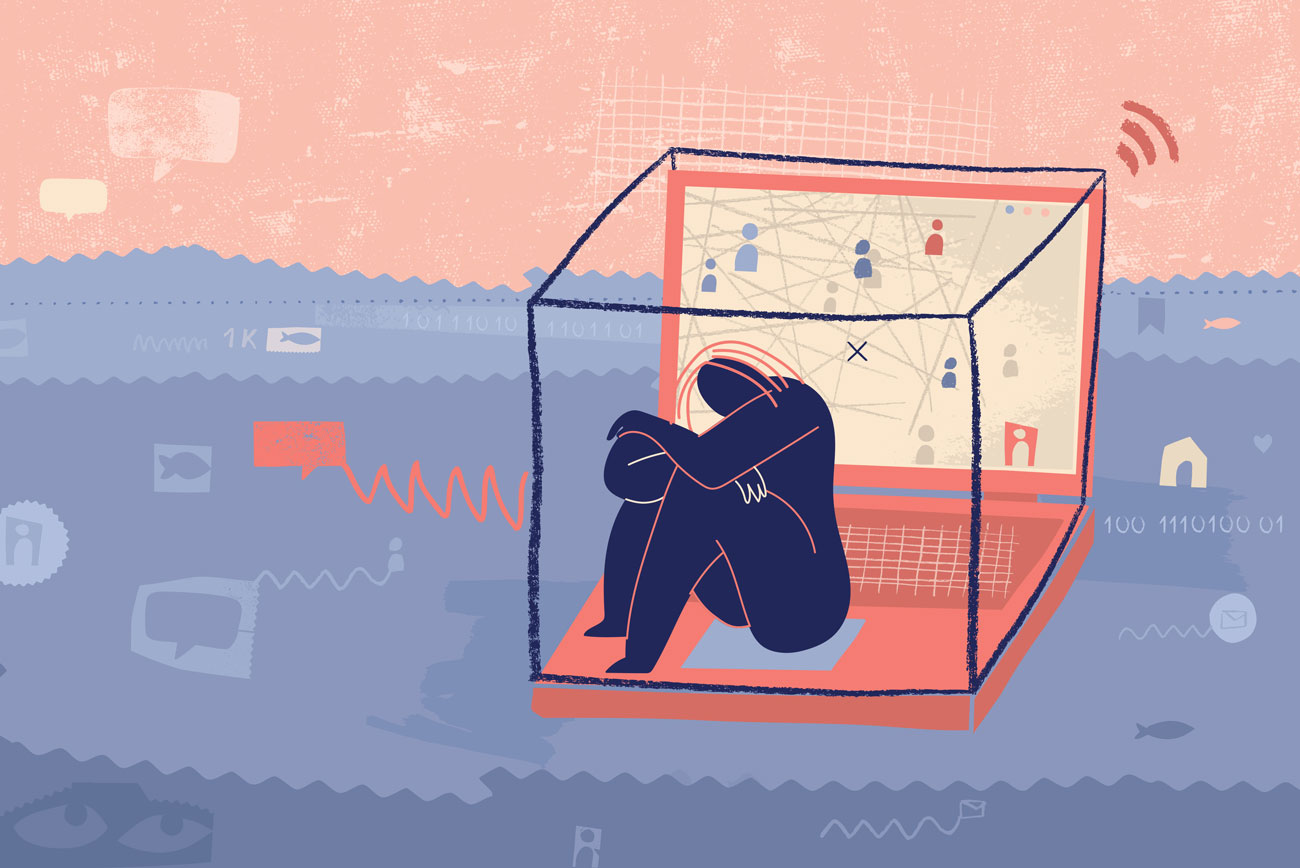
The Loneliness Epidemic: Why do we feel more lonely than ever?
Do you ever feel lonely even when you’re surrounded by people? If so, you’re not alone.
We’ve never been more available to others, connected by smart phones and social media to hundreds of contacts all the time from all over the world. The promise of community lies at our fingertips, with vast networks of people who share our interests and mutual friends just a swipe away. And yet, loneliness is one of the most frequently searched mental health topics in 2026 – despite most people rarely asking themselves out loud: why do I feel so alone?
Last year, the World Health Organisation declared loneliness a global public health emergency, linking persistent loneliness to an estimated 871,000 deaths per year. This figure works out at roughly 100 deaths per hour annually.
A Censuswide wide survey found that 47% of Gen Z respondents reported feeling lonely often – ironically, marking the generation with the most tools for connection as the loneliest in history. This isn’t to diminish the struggles of older generations. The ONS reports that the number of over 50s experiencing loneliness is projected to reach two million in 2025/26, up by 49% since 2015/16 – a group which faces the extra vulnerabilities of retirement, bereavement and declining mobility.
Why is everyone so lonely?
So, why is everyone so lonely? The answer to this simple question is more complex than you might expect, and strongly tied to the structures underpinning modern living. The digital world has replaced many connective spaces such as places of worship, community centres and third spaces, where connection once formed organically with a basis in shared activity.
Now – whilst connection is abundant – it can be superficial, coexist with physical isolation, and leave our minds and hearts missing something essential to our biology. Consultant Psychiatrist Dr Andy Zamar comments “we see loneliness as a true epidemic across all age groups now, and it’s a real concern for brain health – especially in the elderly, as it speeds up brain atrophy.”
Here, we will dive deeper into what loneliness actually does to your brain and body, who is at the highest risk of loneliness, and how to recognise when loneliness seeps into mental illness. Can loneliness affect your mental health? Is loneliness a sign of depression? How do I stop feeling isolated?
What does loneliness actually do to your brain and body?
Whilst loneliness can manifest as feelings of discomfort, sadness or dissociation for many people, it’s not simply an emotional state. Loneliness can be understood as a biological state, which over time can cause structural damage to the body and brain. Understanding this is important in removing stigma around loneliness, and shifting our perception of loneliness from a personal problem to a real clinical concern.
Loneliness as physical pain
Interestingly, functional MRI scans (fMRI) of the brain demonstrate that both loneliness and physical injury activate the same pain centres of the brain, which light up on scans in instances of social rejection and physical isolation.
So, loneliness is processed by the body in the same way as physical pain – making the two experiences indistinguishable on a neurological level – shifting the nervous system into a protective state. In terms of evolutionary biology, loneliness is a survival threat. The loss of the support and protection offered by your close social group often meant death.
How chronic isolation alters brain structure
Persistent loneliness is a contributor to chronic stress – sustained, high cortisol levels over time. Chronic stress can have devastating effects on the brain – damaging social cognition and emotional regulation through literally changing the volume and shape of the brain. A particularly startling finding is that loneliness is associated with a 31% higher risk of dementia and a 74% increased risk of vascular dementia – the kind of dementia caused by reduced blood flow in the brain.
The cardiovascular impact and mortality risk
Regarding physical impact, studies have shown that chronic loneliness elevates mortality risk by 26%, and is associated with a 29% increased risk of coronary heart disease. Loneliness also causes sleep disturbance, being associated with non-restorative sleep and symptoms of insomnia.
Cellular inflammation and immune dysfunction
Chronically lonely people have been observed to exhibit elevated levels of inflammation in the body, which causes dysfunction of the immune system. This is directly linked to the damage of healthy tissue in the body, cardiovascular disease and the onset of type 2 diabetes.
Can loneliness cause depression?
The short answer is yes. Loneliness does not simply elevate your risk of developing a mental illness – it damages the systems that we rely on for recovery. Here’s how:
The data behind loneliness and depression
A study conducted on nearly 50,000 people across seven years showed that individuals who described themselves as ‘always’ lonely had a 50.2% predicted probability of depression. This rate was much higher than those who only sometimes or rarely felt lonely. This clearly demonstrates that the lonelier somebody feels, the higher the risk of depression.
Breaking the cycle
The signs of loneliness affecting your mental health can sometimes be difficult to recognise. This is largely due to the cyclical relationship between loneliness and conditions such as depression – loneliness worsens depression, a state which typically reinforces behaviours of isolation – so in turn, the depression worsens the loneliness. So, people suffering in this way can become trapped in a loop.
To prevent relapse in this type of depression, treating the underlying loneliness is essential. This can involve connecting patients to community activities, suggesting volunteering programmes, referring patients to loneliness specific charities and the use of Cognitive Behavioural Therapy (CBT) adapted specifically for loneliness.
Loneliness, anxiety and hypervigilance
Loneliness is strongly linked to anxiety disorders – with a 2026 study showing that lonely people were almost four times more likely to qualify for generalised anxiety disorder. Chronic loneliness can create a state of hypervigilance to perceived social threats, as isolated people become more sensitive to social rejection. This increases the likelihood that a lonely person will interpret neutral social signals as negative and socially withdraw, meaning that forming connections becomes even more nerve-wracking over time.
A new framework for recovery
This tells us that screening for loneliness is much more important in a clinical setting than it is given credit for. If you struggle with treatment resistant depression, anxiety or substance use and you feel lonely, meaningful recovery could involve social intervention alongside treatments such as medication, talking therapies and rTMS.
How to stop feeling lonely: ways to rebuild genuine connection
Loneliness doesn’t discriminate. Anybody can fall victim to loneliness and isolation, and for many reasons. If you are seeking support to overcome loneliness, the tips below are designed for you.
- Reframe what connection requires: You can be surrounded by friends who you see many times a week, but still feel lonely. Mere social contact is not a cure to deeper feelings of loneliness. Loneliness is relieved by social contact that meets your human need for belonging, intimacy and your desire to be known.Research shows that just a few genuine connections can meet our emotional needs. Honest conversations in the absence of social performance can be deeply healing. Try to be more discerning about who you offer your social energy to, which of your friends care about your needs – and make a conscious effort to spend time with these people.
- Invest in physical presence: Prioritise physical presence where you can. Engage in shared, intentional activities with friends such as fitness, cooking, or starting a series together. Put time-locks on your social media when you’re planning to see friends, or put your phone in another room. Practice the art of listening to understand, and actively try out activities that promote creativity and the sharing of ideas.
- Build your tolerance for vulnerability, gradually: If you have experienced feelings of social rejection, vulnerability can be daunting. Start small. To practice sharing small details – honest, low stakes, but genuine opinions – and experience acceptance, can be your first step towards finding comfort in socialising.Sharing yourself and allowing yourself to be known in a safe space is a deeply important, corrective emotional experience to combat loneliness.
- Treat your social life as a health priority: We schedule dental appointments, gym sessions and work commitments due to our belief that these are necessary and enriching. People rarely schedule social connection with the same level of intentionality. Why?Treating time with loved ones as non-negotiable for our happiness is one of the easiest practical shifts to make. Blocking and protecting time for nourishing our relationships deserves the same priority as other commitments we take for granted.
- Seek professional help: If loneliness has already impacted your mental health to the point that you are experiencing symptoms associated with depression and anxiety such as low mood, an inability to enjoy life, sleep disturbance, irritability or appetite changes, you may benefit from a consultation with one of our dedicated specialists at the London Psychiatry Centre.
Loneliness is not a personal failure, a character flaw or an irreversible issue. It is a signal that you are craving connection – something your mind is designed to do.
If you are interested in exploring what professional support might look like for you, we offer a full range, evidence-based assessment to help you regain connection to a life that fulfills you.
Contact our team on 020 7580 4224 or info@psychiatrycentre.co.uk for more information or to book a consultation.