

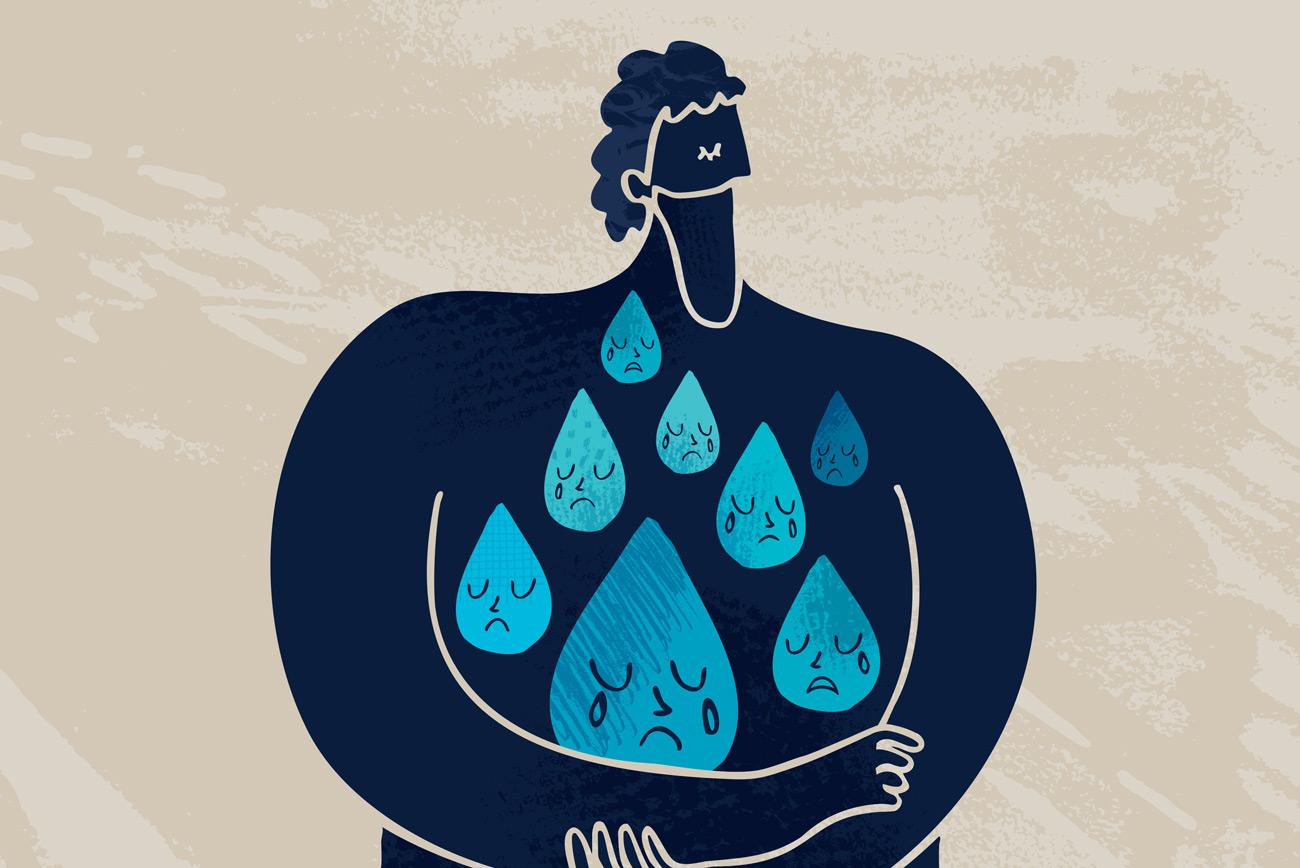
Is it grief, depression, or both? How to find the line – and when to seek help
Grief is one of the few experiences that will find us all. But knowing that it is universal does very little to lessen the impact when it arrives at our own door. Over 600,000 people die in the UK every year – and behind this number are the partners, children, parents and friends left to navigate a loss that no timeline prepares you for.
For most people, grief comes in waves. It can be a non-linear process, and one that gradually softens with time. For others, it becomes something more entrenched – shifting from a natural response to losing someone you love into a situation that needs clinical attention and support.
As psychiatrists, we see how easily the boundaries between natural sorrow and clinical struggle can blur. Around 10% of bereaved people develop prolonged grief disorder, and a further substantial proportion go on to develop clinical depression as the months pass by. These conditions are distinct from one another and are frequently missed entirely, often being dismissed by others as part of the general process of grieving. However, normalising prolonged suffering can prevent you from receiving the care you deserve.
Understanding the difference between grief, prolonged grief disorder, and clinical depression – what each looks like, what drives each, and what each requires – is the first step in ensuring that you get the right support when grieving. Here, we will explore the key characteristics of grief and how it can transition into something more serious, to help you find a way forward in difficult times.
The Weight of Modern Grief: Why We’re Getting Bereavement Wrong
For most of human history, grief existed as an extended communal process. Older cultures, and many non-Western ones today, built mourning into the social fabric. There would be periods of withdrawal from ordinary life, community support and rituals performed. Grief was understood as something that required time, witnesses and other participants to overcome.
In the modern day, this has largely been dismantled. We’ve replaced those structures with two weeks of statutory bereavement leave, gifts and well-wishes alongside the expectation that life returns to normal shortly afterwards. Not to mention the fact that people are lonelier than ever before, so it’s not hard to understand why dealing with grief in 2026 can knock you off balance for what feels like forever.
86% of UK adults over 16 have experienced the death of a loved one. And yet the support structures that would help people move through it without tipping into depression or prolonged grief disorder remain, for many, out of reach. For the majority of bereaved people in the UK, the support available after loss – at work, in primary care, and in what remains of community – is simply inadequate to the scale of what they are experiencing.
This matters clinically because the conditions of modern bereavement – including social isolation, disrupted mourning, and the pressure to return to normal quickly – are precisely the conditions identified as risk factors for grief becoming something more serious.
What Is Prolonged Grief Disorder – and Why Does It Go Unrecognised?
Before we explore instances where grief seeps into depressive disorders, it’s worth mentioning another possibility that sits somewhere in the middle – and still warrants professional support.
Prolonged grief disorder (PGD)
PGD is formally recognised as a distinct diagnosis to depression, anxiety and PTSD. The DSM-5-TR defines PGD as intense grief lasting more than 12 months that significantly impairs daily functioning. The core features of PGD include intense yearning for the person you’ve lost, difficulty accepting the death, identity disruption, emotional numbness or bitterness, and avoidance of reminders of the loss.
Under normal circumstances, around 10% of bereaved people develop prolonged grief disorder. During the COVID-19 pandemic this number rose dramatically, with over 35% of people bereaved during this period meeting the criteria for prolonged grief disorder at thirteen months post-loss. This highlights the role that social isolation during times of ‘lockdown’ played in preventing normal grief from resolving, and how important it is to have a solid support system to lean on when grieving.
So, PGD is not the same as depression, which matters for treatment. Research shows that grief-specific therapy, which includes therapies such as grief specific CBT and specialised EMDR, is significantly more effective for PGD than standard depression treatment. Getting the diagnosis right means getting the treatment right.
Consultant psychiatrist Dr Andy Zamar adds “pathological grief can take many forms, such as mood disorders, stress related disorders – including PTSD – and treatment in these cases is warranted. All these conditions respond well to rTMS without side effects, and in the United States the FDA very recently approved rTMS for PTSD”.
Grief vs Depression: What Is the Difference? (And Why This Matters)
Depression and grief share a great deal of common ground. It’s entirely possible to experience both at the same time, as bereavement can trigger a depressive episode – particularly in those with a prior history of depression. When this happens, both the grief and the depression need to be addressed. However, research confirms that grief and depression are clinically distinguishable, and this distinction has real implications for how each should be treated.
Grief carries physical dimensions that surprise many people, which overlap with signs of depression. These include heavy sadness, fatigue, disturbed sleep, difficulty concentrating, and withdrawal from social life. Both grief and depression can make ordinary tasks feel overwhelming, and approximately one-third of adults over 40 report severe grief after the loss of a loved one.
But the intensity of that grief doesn’t in itself indicate that clinical intervention is needed. The important question is not how intense the grief is, but what it is doing over time. Consider pausing for a moment to consider: is grief gradually integrating or is it consuming you? Does your grief impact your ability to function in everyday life? These differences in trajectory are what matter.
The most important clinical distinction is the experience of pleasure. Up to 70% of people living with depression experience a complete inability to feel pleasure from activities that once brought joy. In grief, this may temporarily be present, but it usually lifts. In depression, it doesn’t. The world doesn’t just feel grey; it feels permanently grey.
A second key distinction is self-worth. In normal grief, self-worth is often preserved. You may feel devastated, but you do not typically feel worthless. Depression almost always impacts self-worth, bringing about feelings of guilt, shame and a sense of being fundamentally flawed. If losing someone has shifted you into a state of worthlessness, or left you feeling that life isn’t worth living, this shift is clinically significant.
Another key distinction lies in your relationship to memories. In grief, thinking of the person you lost is painful, but those memories can carry warmth and comfort. In depression, even positive memories can feel flat, hopeless or inaccessible.
Signs It Is Time to Seek Help — and What Help Looks Like For You
Although grief is not a linear process, there are signs that what you are experiencing now deserves clinical attention. Recognising those signs early can make a real difference to outcomes.
Signs that grief may have become prolonged grief disorder or depression:
- Your grief is intensifying with time, or staying the same months after the loss
- You are unable to find pleasure – activities, relationships, or experiences that once mattered to you feel hollow or pointless
- You feel worthless, guilty, and as though your life is not worth living
- You are significantly struggling to function — at work, in relationships, or with basic self-care
- You avoid anything that reminds you of the person you lost, to the point that it restricts your life
- You feel that your identity has been so disrupted by the loss of your loved one that you don’t know who you are without them
- You are having thoughts of self-harm or suicide
If any of these points resonate with you, it’s worth seeking help. Not because something has gone wrong in how you have grieved, but because you deserve support that accounts for the gravity of your experience so that you can regain your quality of life and sense of self.
If you’re experiencing both grief and depression simultaneously, assessment is the essential first step. As the two conditions require different treatment approaches, addressing one without the other often leaves the underlying problem intact.
At The London Psychiatry Centre, our clinicians offer comprehensive assessment and treatment for depression and the range of complex emotional presentations that often follow bereavement. Treatment is integrative with options ranging from medication, to focussed CBT, EMDR and rTMS.
Contact our team on 020 7580 4224 or info@psychiatrycentre.co.uk to book a consultation.
Be kind to yourself. You don’t have to meet a threshold of suffering before reaching out. If it feels as if you are stuck inside your grief and can see no way out, this is more than enough. Grief doesn’t come with an instruction manual or a timeline. And sometimes the right question – is this still grief, or is it something else? – is the beginning of recovery.